
Don’t Wear These Swimsuits on Cruise Ships
A cruise vacation sounds simple: sunshine, ocean views, pool days, and relaxed vibes. Naturally, packing swimsuits feels like the easiest part of planning.
But here’s the truth most first-time cruisers learn the hard way — not every swimsuit belongs on a cruise ship.
Cruises are very different from beaches or resorts. You’re sharing space with families, dining areas are often right next to pools, and you’re constantly moving between activities, decks, and your cabin.
If you want to feel confident, comfortable, and cruise-appropriate, here are the swimsuits you should avoid wearing on cruise ships — and what works better instead.
1. Extremely Revealing Swimsuits
Micro bikinis, ultra-thin straps, and barely-there designs may look stunning in Instagram photos, but they’re usually a bad idea on cruise ships.
Cruise pools are public spaces shared by:
- Families
- Children
- Older travelers
- Couples of all ages
Unlike adult-only resorts, most cruise lines expect swimwear to stay family-friendly, especially outside the pool itself. Dining venues, bars, and lounges are often steps away from the pool deck, and walking around in an extremely revealing swimsuit can attract unwanted attention — or even a polite request from staff to cover up.
Beyond etiquette, there’s also the comfort factor. These swimsuits require constant adjusting, make it hard to move freely, and can leave you feeling self-conscious instead of relaxed.
If you’re worried about slipping, shifting, or checking your swimsuit every few minutes, it’s not cruise-appropriate.
2. Cheap or Low-Quality Swimsuits
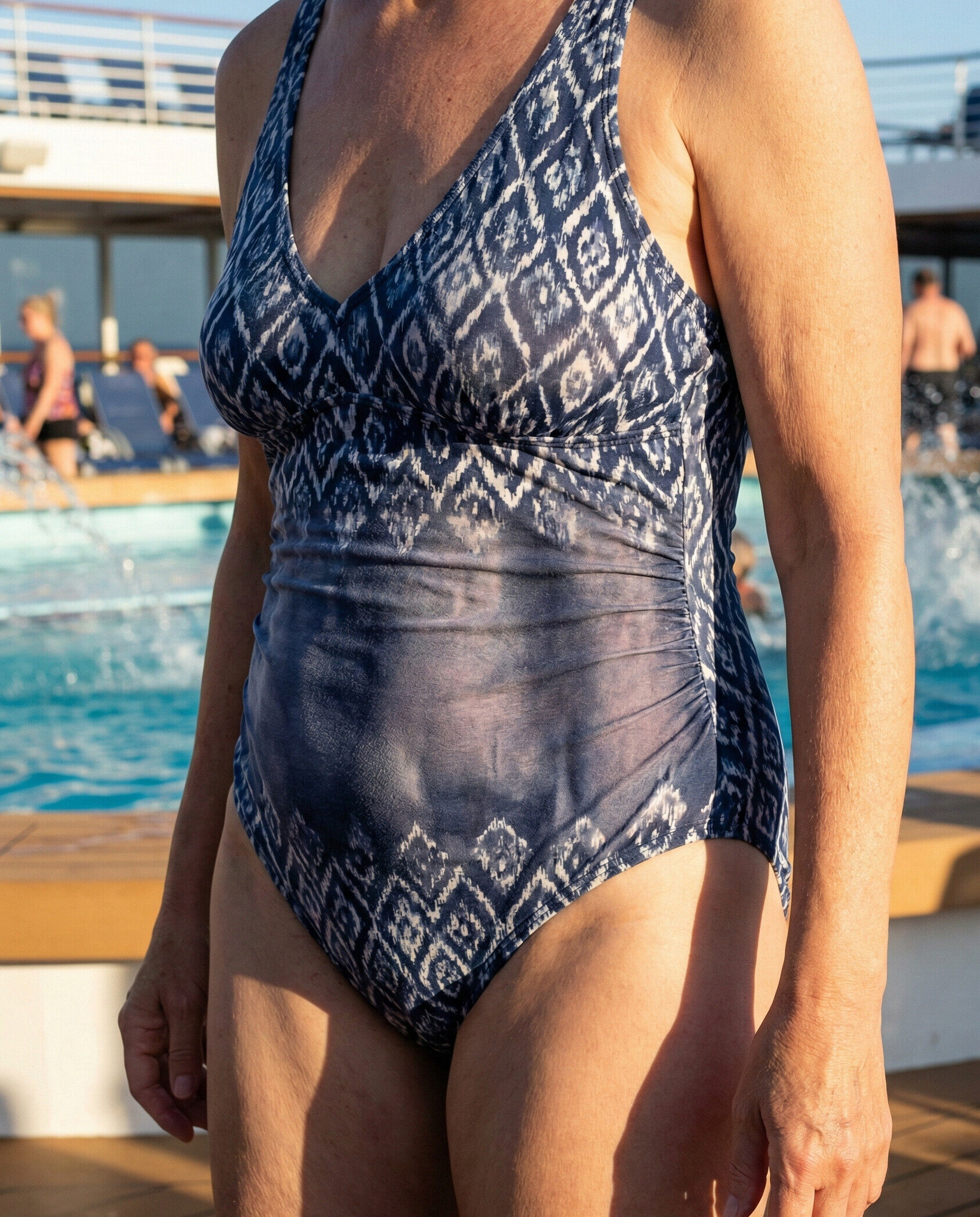
A budget swimsuit might work fine for a quick beach day, but cruises put swimwear through much more stress.
On a cruise, your swimsuit is exposed to:
- Strong chlorine in pools
- Saltwater splashes
- Intense sun
- Long hours of wear
Low-quality swimsuits tend to:
- Stretch out quickly
- Lose their shape
- Fade in color
- Become see-through when wet
Nothing ruins a relaxing pool day faster than realizing your swimsuit doesn’t look or feel the way it did when dry. Investing in better fabric and construction makes a huge difference on a cruise.
3. Swimsuits With No Support

Support matters — regardless of body type.
Cruise ships aren’t just about lounging. You’ll find:
- Pool games
- Water slides
- Swimming activities
- Ship movement from waves
Swimsuits without lining, elastic structure, or proper support can shift unexpectedly when you move. This doesn’t just feel uncomfortable — it can make activities stressful instead of fun.
A cruise swimsuit should allow you to swim, walk, and relax without worrying about wardrobe issues.
4. High Wardrobe-Malfunction Risk Swimsuits

If a swimsuit relies heavily on:
- Thin tie strings
- Loose knots
- Minimal structure
…it’s risky on a cruise ship.
Strong winds, sudden movements, water slides, and even the ship’s motion can all increase the chances of a wardrobe malfunction. What might feel “manageable” at a calm beach can quickly become unreliable onboard.
Cruises are about ease and confidence — not constantly checking whether everything is still in place.
5. Extremely Dark Swimsuits in Hot Weather
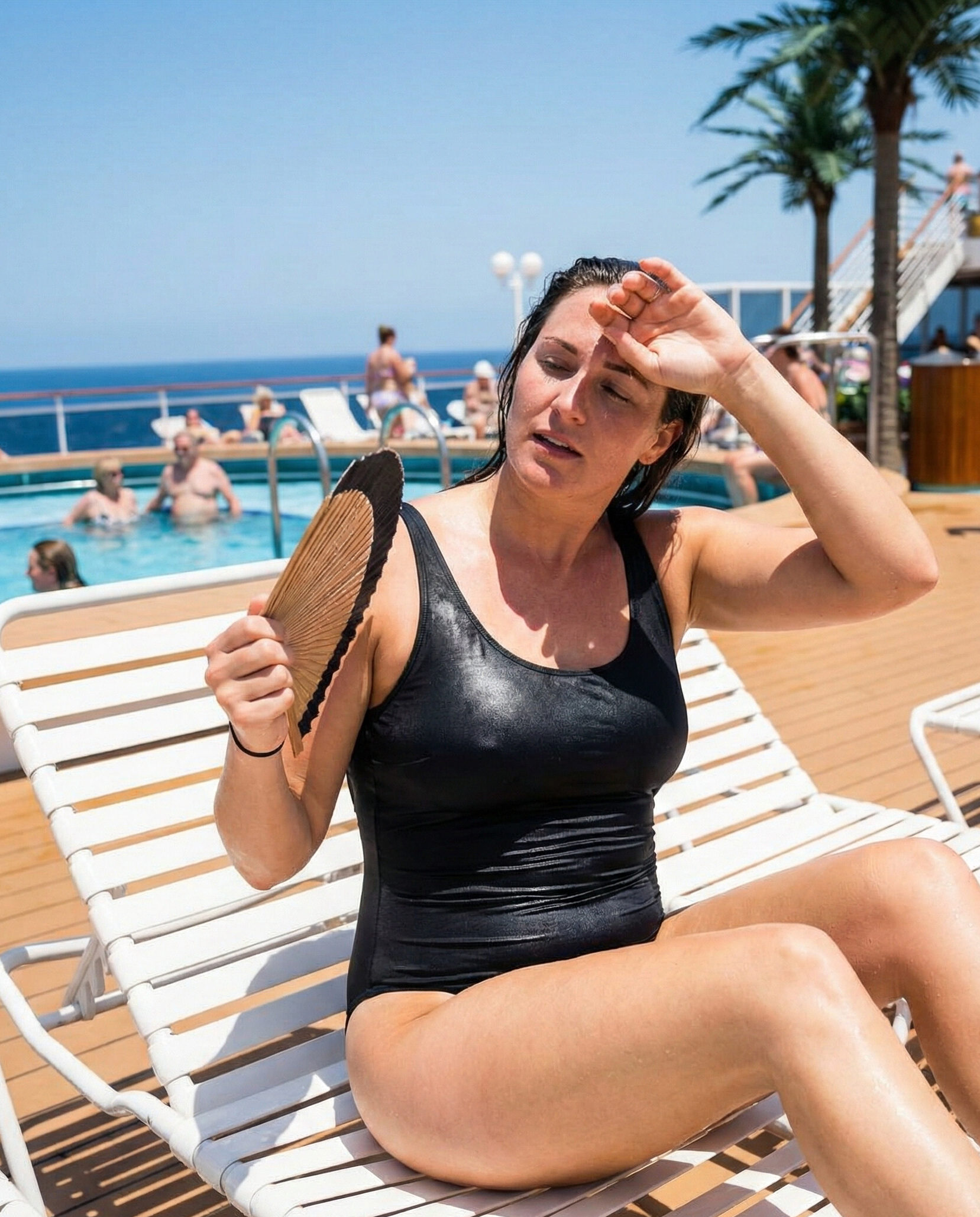
Black and very dark swimsuits are undeniably stylish, but they’re not always practical for tropical cruises.
Dark colors absorb more heat, which means:
- Fabric heats up quickly in direct sun
- Sitting on lounge chairs becomes uncomfortable
- You feel warmer outside the pool
On sunny deck days, lighter colors, pastels, or bright tones are simply more comfortable and refreshing.
6. Swimsuits That Are Hard to Walk Around In
On a cruise, you’re rarely just sitting still.
You’ll walk from the pool to:
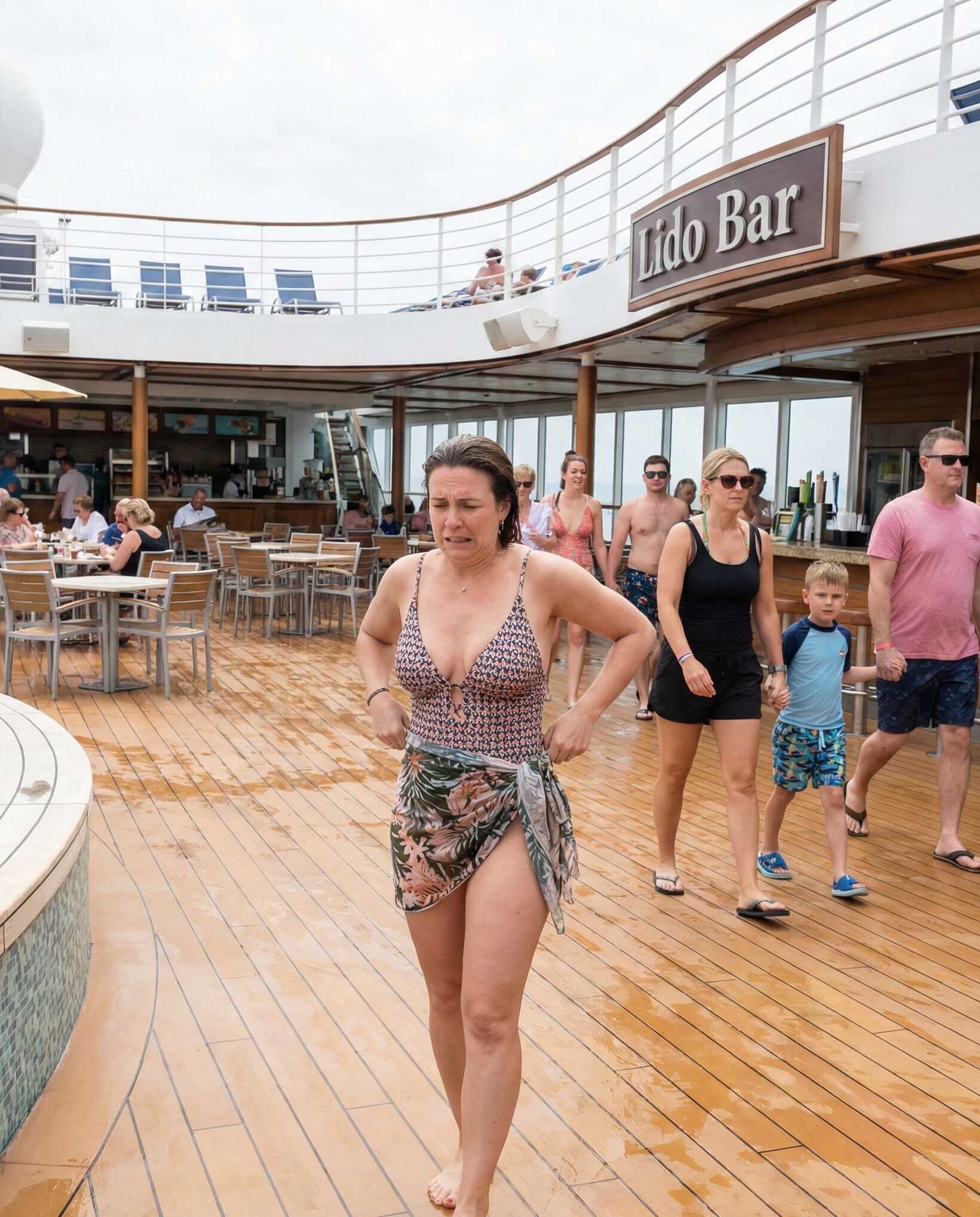
- Grab drinks or snacks
- Visit a poolside café
- Head back to your cabin
- Join deck activities
If your swimsuit feels awkward the moment you stand up, it’s not cruise-friendly. Designs that ride up, dig in, or restrict movement make simple tasks feel uncomfortable.
The best cruise swimsuits let you move naturally — without needing constant adjustments or a cover-up just to feel normal.
7. Swimsuits With Heavy Metal or Hard Accessories

Some swimsuits feature decorative metal rings, chains, or hard embellishments. While these can look stylish, they’re often impractical on a cruise.
Common problems include:
- Metal heating up in the sun
- Discomfort when sitting or lying down
- Scratching pool surfaces or lounge chairs
- Rusting after repeated water exposure
Cruise swimwear should be lightweight, flexible, and comfortable for long wear — not just visually appealing.
8. Swimsuits That Don’t Match Cruise Dress Codes
Many travelers don’t realize that cruise lines do have expectations around appropriate swimwear, even in pool areas.
Most cruises prefer:
- Properly covering swimwear
- Non-sheer fabrics
- Family-friendly designs
Swimsuits designed specifically for adult beach clubs or nightlife resorts may not be welcomed in common cruise areas. In some cases, staff may politely ask guests to wear a cover-up when moving away from the pool.
Avoid the awkward moment by choosing cruise-appropriate styles from the start.

I am Zoe Grace, a passionate enthusiast of cruise ships. With a decade of firsthand experience in the cruising industry, I have developed a deep understanding of the intricacies and wonders that these majestic vessels hold.
Now, I am excited to embark on a new journey as an author, sharing my knowledge and insights with readers who share my fascination for the world of cruising.
Join me as we explore the captivating world of cruise ships together.


