Cruise Cabin Noise Hacks: 12 Ways to Actually Sleep on a Ship
Slamming cabin doors at 2am, anchor chains dropping at sunrise, and a neighbor’s TV bleeding through paper-thin walls — cruise ship noise catches most first-time cruisers off guard.
The good news is that a few small, packable items can block almost all of it. Here are 12 real hacks, not just “bring earplugs,” that actually solve where cruise cabin noise comes from.
Why Cruise Cabins Are Noisier Than Hotel Rooms

Cruise ship cabins are built lighter and thinner than hotel rooms to save weight across the whole vessel, which means sound travels more easily between cabins, hallways, and the decks above and below you.
Add in mechanical noise from the ship’s engines, anchor operations, and crew activity in early morning hours, and even a well-built cabin can feel loud compared to what you’re used to on land.
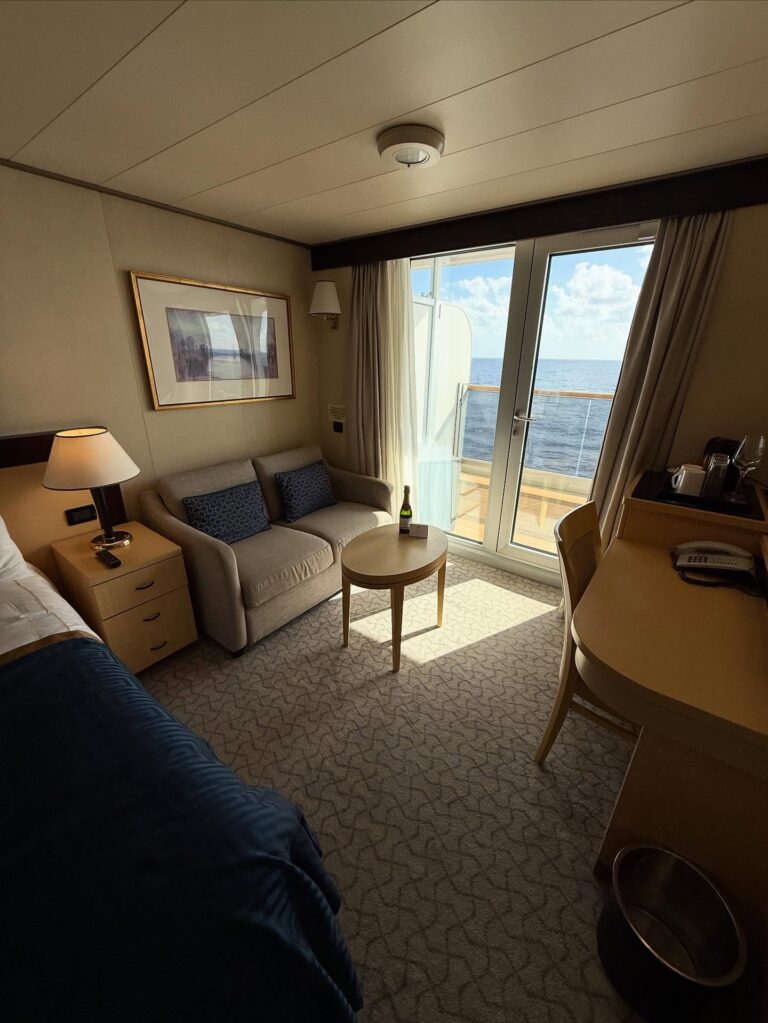
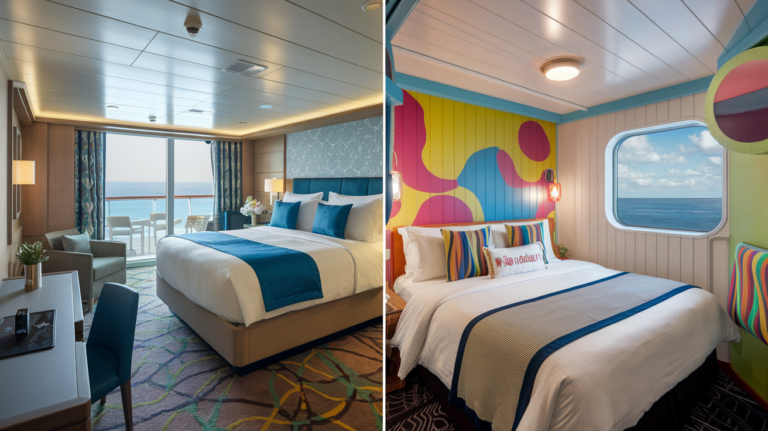
Balcony cabins add glass doors that let in deck noise, while interior cabins are usually quieter but still exposed to hallway and neighbor sound through connecting walls. Either way, noise is one of the most common cruise complaints — and one of the easiest to fix with the right prep.
The Cruise Cabin Noise Hacks Checklist
| Hack | Solves | Cost |
|---|---|---|
| Foam earplugs (multiple pairs) | General hallway and neighbor noise | Low |
| White noise app or machine | Consistent background sound to mask noise | Low |
| Door draft stopper | Sound and light leaking under the door | Low |
| Rubber door wedge | Cabin door slamming when neighbors leave/enter | Low |
| Curtain weights (balcony cabins) | Balcony door and curtain rattling | Low |
| Request a mid-ship cabin | Reduces engine and anchor noise | Free |
| Avoid cabins under the pool deck | Reduces early morning deck chair noise | Free |
| Avoid cabins near elevators | Reduces mechanical and foot traffic noise | Free |
| Noise-canceling headphones | Personal noise control while resting | Medium |
| Do-Not-Disturb sign use | Reduces steward knocking during rest hours | Free |
| Soft luggage padding against walls | Slight sound dampening for shared walls | Low |
| Fan for consistent background hum | Masks intermittent noise naturally | Low |
1. Pack Multiple Pairs of Foam Earplugs

One pair is never enough for a full cruise — pack at least 4–5 pairs since they lose effectiveness after repeated use and are easy to misplace in a cabin. Foam earplugs remain the single most effective, lowest-cost fix for general hallway and neighbor noise.
2. Use a White Noise App or Small Machine
A steady white noise track masks inconsistent sounds — footsteps, doors, distant conversations — far more effectively than silence does, since your brain reacts more to sudden noise changes than to constant background sound. Most phones can run this offline without needing WiFi or cellular data.
3. Bring a Door Draft Stopper

Cabin doors typically have a gap at the bottom that lets in both light and hallway noise. A slim, foldable draft stopper blocks this gap and noticeably reduces the sound of hallway foot traffic, especially during early morning housekeeping rounds.
4. Pack a Rubber Door Wedge

Cabin doors are often heavier and louder than hotel doors, and a neighbor’s door slamming shut at odd hours is one of the most common cruise noise complaints. While you can’t control their door, a wedge helps prevent your own door from banging shut if it’s a design that swings closed on its own.
5. Use Curtain Weights on Balcony Cabins

Balcony cabin curtains can rattle or blow against the glass door when there’s wind, particularly on higher decks or during days at sea. Small clip-on curtain weights stop this movement without blocking airflow if you like sleeping with the door cracked open.
6. Request a Mid-Ship Cabin
Cabins toward the front (bow) or back (stern) of the ship tend to feel more movement and mechanical noise, especially on rougher sailing days. A mid-ship cabin, closer to the ship’s center of gravity, is generally the quietest and most stable location on board.
7. Avoid Cabins Directly Under the Pool Deck

Early morning deck chair setup and pool deck cleaning can start before sunrise, and the noise travels directly down into cabins located underneath.
When booking, check the deck plan and avoid cabins positioned right below pool or lido deck areas if noise sensitivity is a concern.
8. Avoid Cabins Near Elevators or Stairwells
Elevator mechanics and constant foot traffic make cabins near elevator banks and stairwells noticeably louder than cabins further down the hallway. This is worth checking on the deck plan before booking, not something you can fix once you’re already in the cabin.
9. Pack Noise-Canceling Headphones

For daytime rest or reading in the cabin, noise-canceling headphones (even without playing anything) block ambient noise more effectively than earplugs alone, and double as your regular travel headphones for flights to and from the ship.
10. Use the Do-Not-Disturb Sign Consistently
Cabin stewards often knock for routine service unless a Do-Not-Disturb sign is visibly displayed. Using it consistently during rest hours or naps significantly cuts down on unexpected knocking, which is a more common noise complaint than most first-time cruisers expect.
11. Pad Soft Luggage Against Shared Walls

If your cabin shares a wall with a connecting cabin or a noisy public space, placing a soft suitcase or duffel bag against that wall can slightly dampen sound transfer. It’s not a complete fix, but it helps take the edge off in cabins with unusually thin connecting walls.
12. Run a Small Fan for Background Hum
Beyond cooling the room, a small portable fan creates a steady, natural background hum that masks intermittent noise the same way a white noise app does — useful as a backup if you don’t want to rely on your phone running overnight.
Common Mistakes to Avoid
- Packing only one pair of earplugs — bring several, since they wear out or go missing
- Booking a cabin under the pool deck without checking the deck plan — this is preventable before you even board
- Assuming balcony cabins are always noisier — with curtain weights and a closed door, they can be just as quiet as interior cabins
- Not using the Do-Not-Disturb sign — steward knocking is one of the most avoidable noise issues on the ship
- Ignoring cabin location when booking — noise is often a location problem, not just a packing problem
What I’d Pack Differently
Based on current cruise-line guidance and common traveler feedback, the item travelers most often wish they’d packed is a door draft stopper — it’s a small, inexpensive item that solves a noise source most first-time cruisers don’t anticipate until their first night onboard, when hallway sound turns out louder than expected.
FAQs
Are balcony cabins noisier than interior cabins? Not necessarily — balcony cabins have a glass door that can let in deck noise, but with curtain weights and the door closed, they can be just as quiet as interior cabins.
Does cabin location really make a noise difference? Yes — mid-ship cabins away from elevators, stairwells, and the pool deck are consistently quieter than cabins near high-traffic or mechanical areas.
Is it worth requesting a specific cabin location for noise reasons? Yes, especially if you’re noise-sensitive. Checking the deck plan before booking and avoiding cabins under the pool deck or near elevators prevents most noise issues before they start.
Do noise-canceling headphones work better than earplugs for sleeping? Not usually for overnight sleep, since they’re bulkier — earplugs paired with white noise tend to work better for sleeping, while headphones are more useful for daytime rest.

I am Zoe Grace, a passionate enthusiast of cruise ships. With a decade of firsthand experience in the cruising industry, I have developed a deep understanding of the intricacies and wonders that these majestic vessels hold.
Now, I am excited to embark on a new journey as an author, sharing my knowledge and insights with readers who share my fascination for the world of cruising.
Join me as we explore the captivating world of cruise ships together.