Ireland Packing List For August: Layers for Rain, Wind, and Sun
Packing for Ireland in August comes down to accepting one thing early: you will likely see sun, rain, and wind in the same afternoon, sometimes more than once. Irish weather changes fast, and August, despite being peak summer, is no exception.
The upside is that it rarely gets extreme in either direction. Days are mild rather than hot, and a proper layering system handles almost everything the weather throws at you without needing to overpack.
The other detail people underestimate is the ground itself. Between the Cliffs of Moher, castle grounds, and countryside walks, you’ll be on uneven, often wet or muddy terrain more than you expect, even on a city-focused trip. Waterproof shoes with real grip matter more here than in most European destinations.
Note: This is a complete packing list. If you’d rather travel light, there’s a pack-light section right after it.
What Is the Weather Like in Ireland in August?
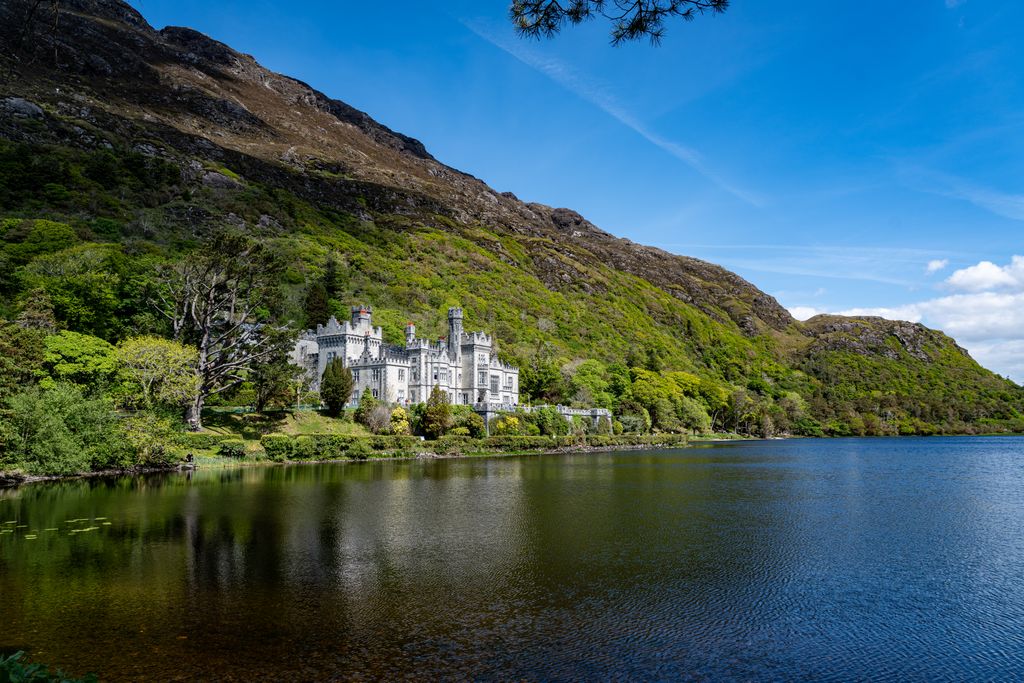
Ireland in August is mild and unpredictable, with daytime highs typically between 15°C and 20°C (59°F–68°F). Rain is common even on days that start sunny, and wind is a near-constant companion, especially along the coast.
Evenings cool further, so pack for a range of conditions within a single day rather than one fixed forecast.
Your Complete Ireland Packing List For August
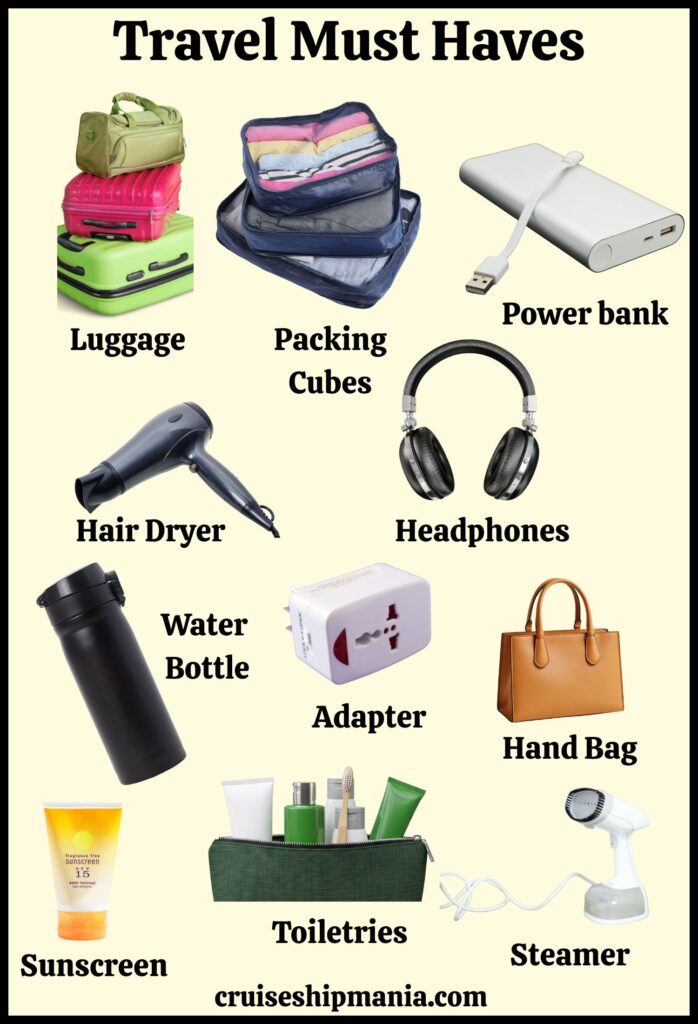
Packing well for Ireland means building a flexible layering system, prioritizing waterproof footwear, and accepting that an umbrella will get more use than sunglasses. Here’s everything worth bringing.
Luggage & Packing Tools
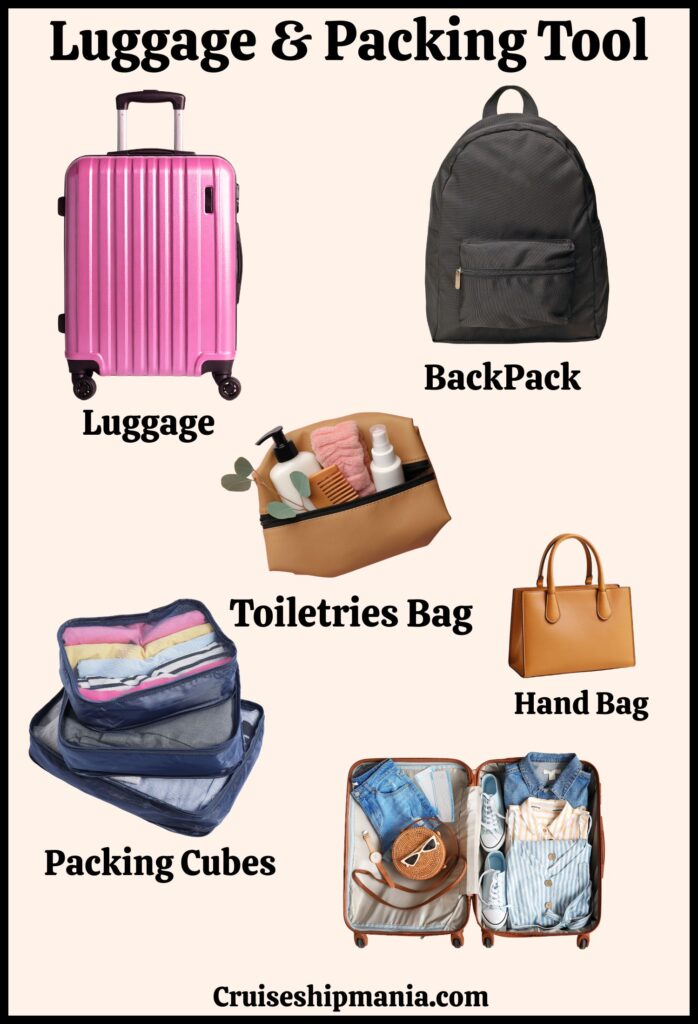
A slightly more compact suitcase makes sense here, since many bed and breakfasts and older hotels have narrow stairs and limited storage space. A packable day bag is useful for day trips to castles, cliffs, or countryside towns.


- Mid-size suitcase or a large weekender bag
- Packable day bag for excursions
- Packing cubes set
- Waterproof dry bag for wet-weather days
- Small crossbody bag with a secure zipper
- Luggage ID tags
Clothes
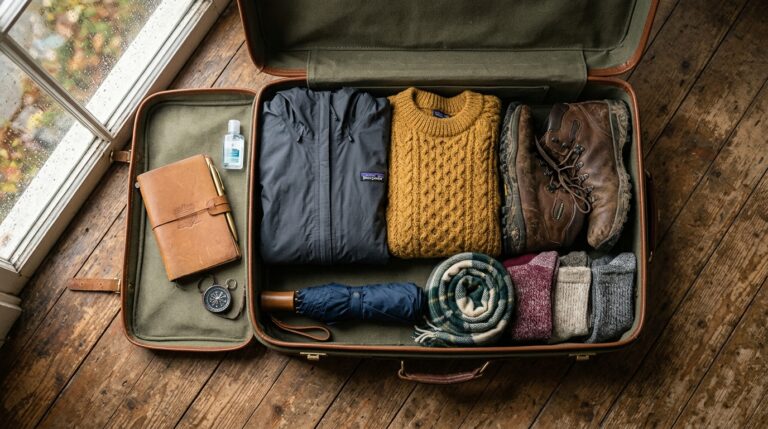
Build outfits in layers you can add or remove quickly: a breathable base, a warm mid-layer like a light sweater or fleece, and a waterproof, windproof shell on top. This combination covers sunny mornings, sudden showers, and windy coastal viewpoints without needing separate outfits for each.


- Waterproof, windproof jacket (1)
- Light sweater or fleece mid-layer (1–2)
- Long-sleeve tops for layering (2–3)
- Short-sleeve tops for milder days (2–3)
- Jeans or sturdy trousers (2)
- One warmer layer for cooler evenings (1)
- A water-resistant pair of trousers if your trip includes hiking
- Sleepwear (1–2)
- Warm socks, including wool blend for walking days (4–6)
- Underwear (6–8)
Shoes & Accessories
Waterproof shoes with real tread matter more in Ireland than almost anywhere else in Europe. Cliffside paths, castle grounds, and countryside walks are often wet, muddy, or uneven, even in the height of summer.

- Waterproof walking shoes or light hiking shoes (1)
- A second comfortable pair for city days (1)
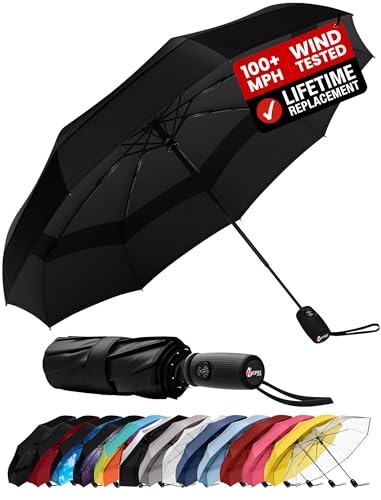
- A sturdy compact umbrella
- A warm hat or beanie for wind and cooler evenings
- A light scarf or neck gaiter for coastal wind
- Sunglasses (worth having on the clear days)
- Crossbody bag with a secure, zippered closure
Skincare
Wind and changeable weather can leave skin dry and a little wind-burned, even without much direct sun. Lip balm and a rich moisturizer earn their place daily.


- Broad-spectrum sunscreen SPF 30 (for the sunny stretches)
- SPF lip balm
- Rich, hydrating moisturizer for wind exposure
- Gentle facial cleanser
- Hydrating face mist
- Hand cream for cool, damp air
Makeup
Keep it simple and weather-resistant, since wind and light rain aren’t kind to heavy makeup on outdoor days.
- Tinted moisturizer or lightweight foundation
- Water-resistant mascara
- Cream blush
- Setting spray
- Lip tint with SPF
- Makeup remover wipes
Hair Care
Wind and humidity, especially along the coast, can undo styling quickly. Simple, low-maintenance options hold up better than anything requiring daily heat styling.

- Travel hair dryer
- Anti-frizz serum
- Dry shampoo
- Hair ties and clips
- A warm hat that doubles as a practical hair-day fix
Documents & Essentials

- Passport or valid ID
- Hotel and B&B confirmations
- Car rental documents and international driving permit, if driving
- Travel insurance details
- Credit card and a backup payment method
- Some cash for smaller towns and rural stops
- Emergency contact card
- Printed copies of key confirmations
First Aid
- Blister pads and moleskin
- Pain relievers
- Antihistamine tablets
- Motion sickness tablets for ferries or winding coastal roads
- Antiseptic wipes and bandages
- Hand sanitizer
Health & Hygiene
- Deodorant
- Travel toothbrush and toothpaste
- Hand sanitizer and travel tissues
- Feminine hygiene products
- Contact lenses and solution
- Lip balm with SPF
Tech & Electronics
Ireland uses Type G plugs, the same three-pin standard as the UK, so a compatible adapter is essential if you’re traveling from elsewhere in Europe or beyond. A power bank helps on long countryside driving days between charging opportunities.


- Type G travel adapter
- Power bank
- Phone charging cable and a backup cable
- Camera for coastal and countryside scenery
- Offline maps downloaded in advance, since rural signal can be spotty
Entertainment
- A book or e-reader for train and car rides
- Downloaded playlists and podcasts
- Small travel journal and pen
- A deck of cards for pub evenings
Extras
- Reusable water bottle
- Zip-top bags for wet or muddy gear
- Small dry bag for electronics on wet excursions
- Stain remover pen
- Mini sewing kit
- A small day pack for hikes and coastal walks
Travel Tips
- Dress in layers you can add or remove throughout the day
- Keep a waterproof shell within reach at all times, even on sunny mornings
- Choose shoes with real tread for cliffside and countryside walks
- Check specific site or trail conditions before hikes, since paths can be muddy after rain
- Carry a printed or offline map for rural areas with limited signal
- Book popular sites like the Cliffs of Moher or Giant’s Causeway in advance during peak summer
- Pack a warm layer even if the forecast looks mild — coastal wind adds a real chill
Must-Haves
- Waterproof, windproof jacket
- Waterproof walking shoes with real tread
- A warm hat and light scarf
- A sturdy compact umbrella
- Type G travel adapter
- Reusable water bottle
- Blister pads and moleskin
Good-to-Have
- A second warm mid-layer for cooler evenings
- Motion sickness tablets for coastal roads or ferries
- Offline maps for rural areas
- A dry bag for wet excursions
- A deck of cards for pub evenings
What to Bring If You Want to Pack Light
Ireland rewards a small, flexible layering system more than a large wardrobe. Focus on pieces that mix and match and handle both city days and countryside walks.
- One waterproof, windproof jacket
- One warm sweater or fleece mid-layer
- 3–4 long-sleeve layering tops
- 2 pairs of jeans or sturdy trousers
- One pair of waterproof walking shoes
- A warm hat, scarf, and sturdy umbrella
- Travel-size toiletries in a clear zip bag
What Not to Pack for Ireland in August
Leave lightweight sandals and anything without real grip at home for anything beyond a city sidewalk. Cliffside paths, castle grounds, and countryside walks are often wet or uneven, even in summer.
- Flimsy sandals or flip-flops as your primary shoe
- A single heavy winter coat instead of a proper layering system
- A flimsy travel umbrella that turns inside out in coastal wind
- A large hard-shell suitcase if your accommodation has narrow stairs
- Shorts and tank tops with no warm layer to pair them with
FAQ: Packing for Ireland in August
How warm does it get in Ireland in August?
Daytime highs typically run 15°C to 20°C (59°F–68°F). It’s mild rather than hot, and can feel cooler still with wind, especially along the coast.
Do I need a raincoat in Ireland in August?
Yes. Rain is common even in the height of summer, often arriving suddenly on days that start sunny. A waterproof, windproof jacket should be with you daily, regardless of the morning forecast.
What shoes are best for Ireland in August?
Waterproof walking shoes or light hiking shoes with real tread. Cliffside paths, castle grounds, and countryside walks are frequently wet or muddy, and thin-soled shoes struggle on uneven terrain.
Is Ireland cold in August?
Not cold, but consistently mild and often breezy. A proper layering system — a base layer, a warm mid-layer, and a waterproof shell — is more useful than either very light summer clothing or heavy winter gear.
What plug adapter do I need for Ireland?
Ireland uses Type G plugs, the same three-pin standard as the UK. A single compatible adapter typically covers your entire trip if you’re also visiting the UK.
What should I pack for a week in Ireland in August?
Focus on a waterproof jacket, one warm mid-layer, 4–5 long-sleeve tops, 2 pairs of trousers, one pair of waterproof walking shoes, a warm hat, and a sturdy umbrella. Layering flexibility matters more than volume here.

I am Zoe Grace, a passionate enthusiast of cruise ships. With a decade of firsthand experience in the cruising industry, I have developed a deep understanding of the intricacies and wonders that these majestic vessels hold.
Now, I am excited to embark on a new journey as an author, sharing my knowledge and insights with readers who share my fascination for the world of cruising.
Join me as we explore the captivating world of cruise ships together.